
1win – A Structural Economic Review of the Betting and Gaming Platform
In the contemporary digital economy, platforms facilitating entertainment and speculative activities occupy a distinct niche, requiring a disciplined analytical framework. This review applies a structured, risk-aware economic lens to examine the operational model of 1win, a platform offering betting and casino services. The analysis will dissect its functional architecture, market positioning, and the inherent financial dynamics, providing a comprehensive overview for the discerning user in Azerbaijan. Understanding the platform’s mechanisms, from registration to financial transactions, is a prerequisite for any informed engagement. The evaluation of 1win azerbaycan operations will prioritize clarity on systemic features and their long-term sustainability implications.
Platform Architecture and Economic Interface Design
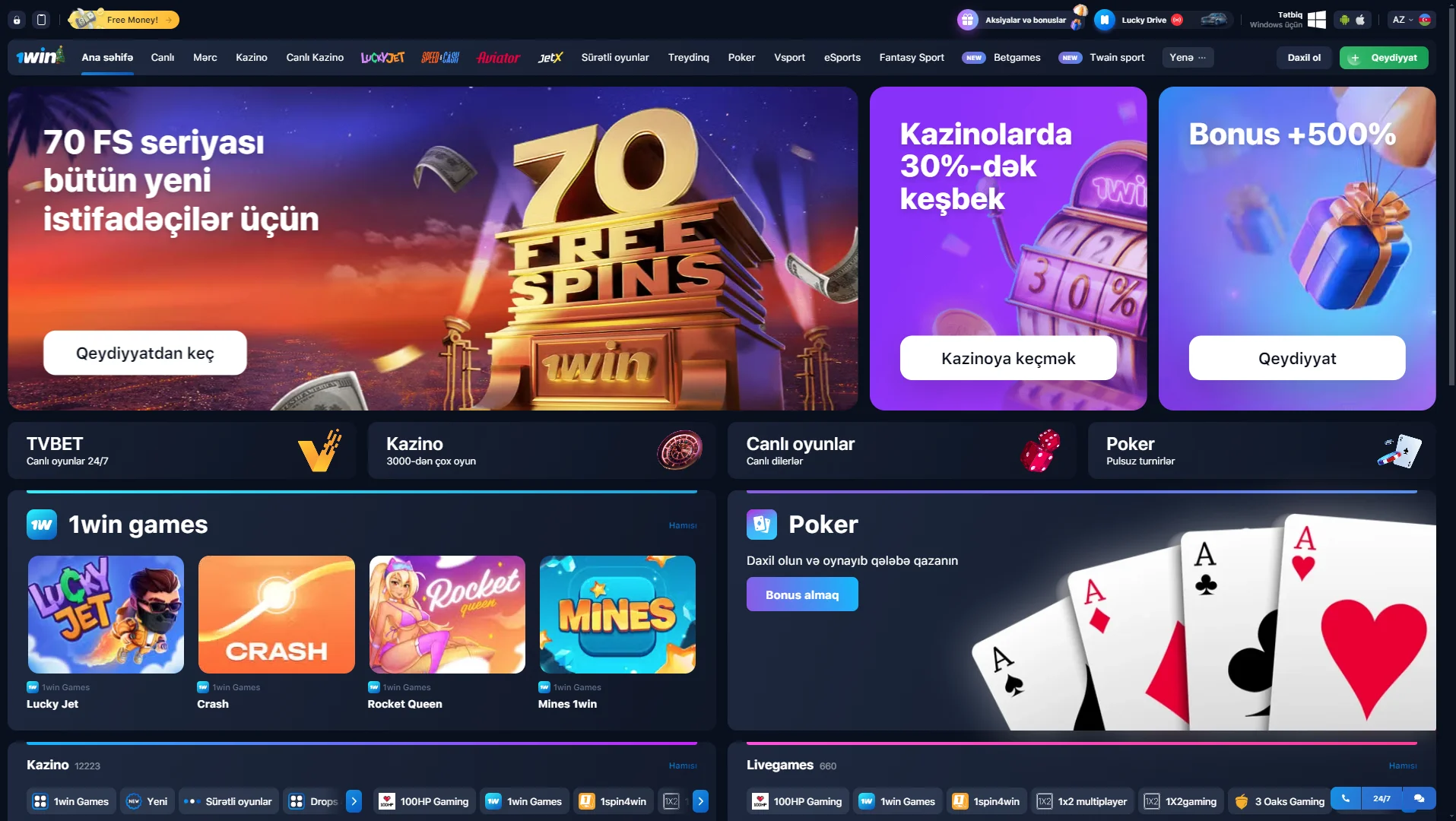
The user interface of any digital service functions as its primary market mechanism, dictating transaction efficiency and user capital allocation. 1win presents a consolidated portal where sports betting markets and casino product verticals are integrated. From an economic perspective, this design promotes cross-utility but necessitates clear user navigation to avoid misallocation of resources. The platform’s layout aims for operational clarity, segregating asset classes-sporting events, live dealer games, virtual slots-into distinct economic sectors. This structural separation allows for targeted engagement, though it requires the user to possess a clear understanding of the differing risk profiles and return volatilities inherent to each sector. The mobile application replicates this economic model, offering a parallel, on-the-go transaction channel with comparable functionality, thus expanding market access points.
1win Market Entry – The Registration and Verification Protocol
Initial access to a financial-adjacent platform constitutes a critical risk management phase. The registration process at 1win acts as the foundational KYC (Know Your Customer) protocol, a standard economic safeguard against systemic instability. Prospective users provide basic identifiers, which initiates an account creation contract. The subsequent verification step, requiring document submission, is not a bureaucratic formality but a crucial economic filter. It establishes user legitimacy, secures the transactional environment for all participants, and is a mandatory precondition for capital repatriation (withdrawals). This gatekeeping mechanism, while occasionally perceived as a friction cost, is essential for the platform’s long-term operational sustainability and trust capital. Delaying verification inherently imposes a liquidity constraint on the user, a significant economic consideration.
Capital Flows – Deposit and Withdrawal Infrastructure
The liquidity channels of a platform are its economic circulatory system. 1win facilitates capital inflows through a diversified portfolio of payment rails tailored for the Azerbaijani market. These include bank card networks, localized electronic wallets, and potentially mobile carrier billing. Each channel carries distinct transaction cost structures (fees, if any) and settlement velocities, impacting the user’s immediate liquidity. The withdrawal process, the critical phase of capital repatriation, is governed by the previously completed verification and the platform’s internal processing policies. Economic efficiency here is measured in processing timeframes and the consistency of execution. A predictable, rule-based withdrawal system reduces economic uncertainty for the user, a key component of platform reliability. Users must model their cash flows accounting for these processing variables, not just the nominal balance.
| Transaction Type | Primary Channels (AZN) | Key Economic Consideration |
|---|---|---|
| Deposit | Bank Cards (Visa/Mastercard), E-wallets, Localized options | Immediate liquidity injection; potential variance in minimum commitment. |
| Withdrawal | Bank transfer, E-wallet return | Liquidity retrieval lag; necessitates full KYC compliance as a sunk cost. |
| Currency | Manat (AZN) as base | Eliminates foreign exchange risk for local users, simplifying cost-benefit analysis. |
| Transaction Cost | Typically absorbed by platform | Reduces friction for micro-transactions, but always verify per channel. |
| Settlement Speed | Deposits: near-instant; Withdrawals: variable (hours to days) | Withdrawal speed is a non-trivial component of effective yield. |
Promotional Capital – Analyzing the 1win Bonus Framework
Promotional incentives in this sector function as targeted capital injections designed to alter user behavior and lower initial engagement barriers. The 1win bonus ecosystem, including welcome offers and ongoing promotions, must be analyzed not as free capital but as conditional liquidity. These instruments come with explicit contractual obligations-wagering requirements-that dictate the number of times the bonus and any associated deposit must be turned over before withdrawal is permitted. From a risk-aware perspective, these requirements significantly alter the probability distribution of converting promotional balances into real, withdrawable capital. Users must calculate the effective playthrough cost and assess whether the underlying games’ statistical return (RTP) makes fulfilling these conditions an economically viable proposition. Misunderstanding this leverage can lead to rapid depletion of the principal deposit.
- Welcome Bonus Structures: Often a matched percentage on the initial deposit, amplifying starting capital but binding it to turnover rules.
- Wagering (Rollover) Requirements: The multiplier (e.g., 35x) that defines the total volume of bets required before withdrawal eligibility. This is the core risk parameter.
- Game Contribution Weightings: Different game types (slots, table games, live casino) may contribute different percentages toward fulfilling requirements, affecting strategy efficiency.
- Time Constraints: Bonuses are typically ephemeral capital; expiration dates impose a deadline on meeting wagering conditions, potentially forcing suboptimal play.
- Maximum Bet Limits Under Bonus Terms: Contracts often restrict bet size while using bonus funds, a risk-management rule to prevent simple hedging strategies.
- Ongoing Promotional Flux: The economic landscape of promotions is dynamic; what is offered today may be restructured tomorrow based on platform liquidity and user acquisition targets.
Operational Risk and Platform Security Economics
The sustainability of any platform handling financial transactions is underpinned by its investment in security infrastructure and regulatory compliance. For 1win, this translates into expenditures on data encryption protocols (SSL), secure payment gateways, and adherence to the licensing jurisdiction’s regulatory framework. This operational overhead is a cost borne by the platform to insure against systemic risks like data breaches or fraudulent activity, which carry catastrophic reputational and financial liabilities. From a user’s economic standpoint, a licensed and secured platform reduces the tail risk of total capital loss due to malpractice. However, the ultimate risk responsibility is non-diversifiable; users are unsecured creditors of the platform. Therefore, the platform’s long-term operational history and transparency are critical, albeit intangible, assets in the risk assessment.
The 1win Support System – A Cost Center for User Retention
Customer support represents a significant operational cost center designed to resolve market failures in user experience. An efficient support system-accessible via live chat, email, or telephone-reduces transaction costs for users facing issues with account access, transaction disputes, or term clarifications. The economic value of support is measured in resolution speed, expertise, and availability (24/7 being the industry standard for mitigating global time-zone arbitrage). For the platform, it is an investment in user retention and trust capital. Prolonged or unresolved support tickets represent a deadweight loss for the user, consuming time-a valuable economic resource-and potentially freezing capital. A platform’s commitment to this function is a proxy indicator of its customer lifetime value calculations and overall service maturity.
Long-Term Viability – A Holistic Economic Assessment of 1win
A final synthesis must move beyond feature enumeration to consider the platform’s position within its competitive landscape and its value proposition sustainability. Key performance indicators from a user-centric economic model include transaction reliability, the transparency of terms (the fine print as a binding contract), and the consistency of service delivery over economic cycles. The platform’s ability to maintain liquidity during peak demand periods (major sporting events) and its adaptation to regulatory shifts are stress tests of its operational resilience. For the Azerbaijani user, localization of payment methods and currency is a primary efficiency gain. The decision to engage with 1win, or any analogous platform, ultimately rests on a personal utility function that weighs the entertainment value against the unequivocal financial risks of capital depreciation, all within the structured economic framework the platform provides.
- Evaluate the total cost of engagement, including the opportunity cost of time and the probabilistic cost of wagering requirements.
- Treat all bonus capital as highly illiquid and contingent, not as an immediate asset on your personal balance sheet.
- Prioritize understanding the full contractual terms of every promotion and financial transaction before commitment.
- Model your bankroll management as a finite resource allocation problem, with strict loss ceilings and defined session budgets.
- Consider the platform’s security and licensing as a form of non-pecuniary insurance; its absence elevates fundamental risk.
- Use the support function proactively for term clarification; information asymmetry is a significant market inefficiency.
- Recognize that the house edge is a structural economic reality across all verticals; it is a cost of participation, not a beatable anomaly.
- Regularly audit your own engagement for behavioral shifts that may indicate a deviation from rational economic planning.
- The convenience of the mobile app increases access frequency, which requires stricter self-imposed capital controls.
- View the platform as a provider of a service with a known negative expected value over the long term; budget accordingly for entertainment.